You get the alert.
You check the dashboard.
The line is spiking.
And you’re already paying for it.
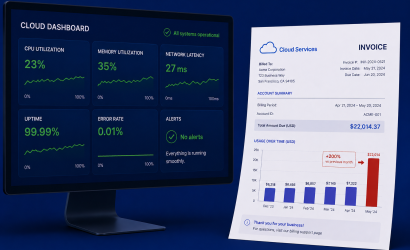
By the time the billing dashboard shows the spike, the money is already gone.
By the time you see a spike in the billing dashboard, it’s already too late. The bill is locked in. The conversation shifts from visibility to post-mortem.
What happened?
Who owns this?
Why didn’t we see it earlier?
Many teams still operate this way. They buy a cost tool, configure dashboards, set alerts – and then wait.
Eventually, the alert fires:
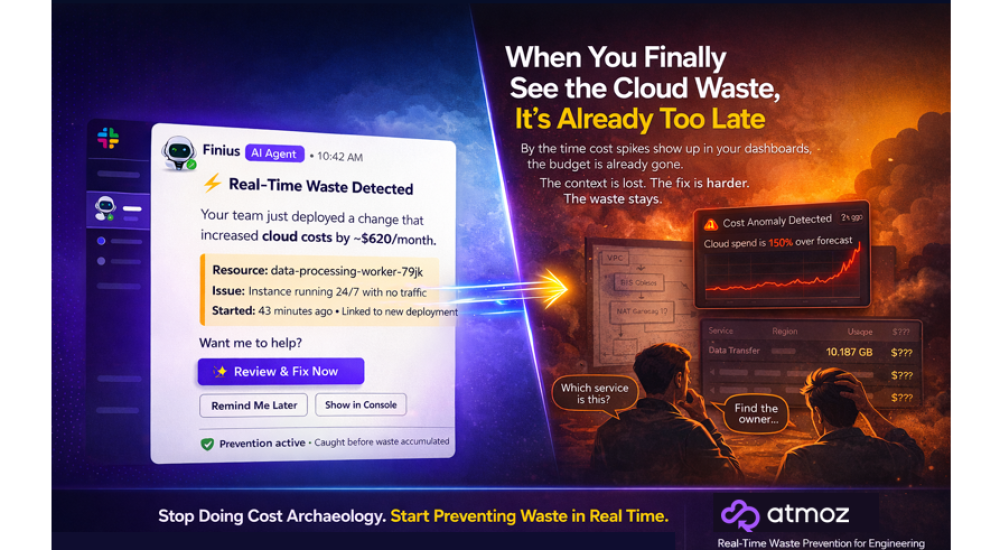
“Cloud costs are 150% over forecast.”
You open the charts. The services look normal. Nothing is failing. No incidents. No outages.
That’s exactly the problem.
The system is healthy. It’s just inefficient.
You message the team:
“Hey, seeing a cost spike on your service.”
They check:
“Traffic looks normal. No changes. Must be the reporting.”
So the real work begins.
You filter. Group. Drill down. Compare usage. Compare tags. Compare regions.
Eventually, you find that line item. Maybe data transfer. Maybe idle compute. Maybe something provisioned months ago during testing.
And now comes the real problem:
You still don’t know what decision created it.
The billing system shows numbers.
Engineering systems show infrastructure.
But nothing connects the two in time.
So instead of optimization, you end up doing archaeology.
Trying to map invoices to architecture diagrams.
Hoping tagging is accurate.
Hoping someone remembers why something was created.
This is not engineering work. This is reconstruction work.
Most tools show you where the money is going. Few show you why it started or how to stop it safely.
They show the bleeding.
They don’t give you the tourniquet.
So alerts pile up:
Cost anomaly detected.
Unusual usage pattern.
Budget threshold exceeded.
But the engineer sees:
System normal.
And when the action isn’t obvious, the action becomes nothing.
So the waste stays.
A forgotten environment still running.
An oversized configuration nobody revisits.
An AI workload still consuming resources after experimentation ended.
None of these are mistakes. They are the natural by-product of fast engineering teams working without real-time feedback.
The real issue isn’t visibility.
It’s timing.
By the time waste appears in dashboards:
The context is gone.
The budget is already impacted.
And fixing it may be risky or not worth the effort.
So teams live with it.
What’s missing isn’t another report.
It’s the connection between the number and the decision. Between the what and the how. Between detection and action.
Engineering teams don’t need more dashboards.
They need systems that help them make better decisions while they build.
This is the shift toward Real-Time Waste Prevention for Engineering – making efficiency visible when decisions are made, not weeks later when nothing can be changed.
That’s the problem Atmoz was built to solve.
Atmoz helps engineering teams detect inefficient cloud and AI usage as it happens, identify ownership automatically, and engage the right engineer while context still exists. Instead of alerts that arrive too late, teams get immediate awareness and simple remediation paths while fixes are still easy.
Because the real goal isn’t better reporting.
It’s making sure waste never becomes a report in the first place.
And as engineering velocity continues to accelerate with AI, that shift is quickly becoming not just valuable – but necessary.